

-
Gaming powerhouse
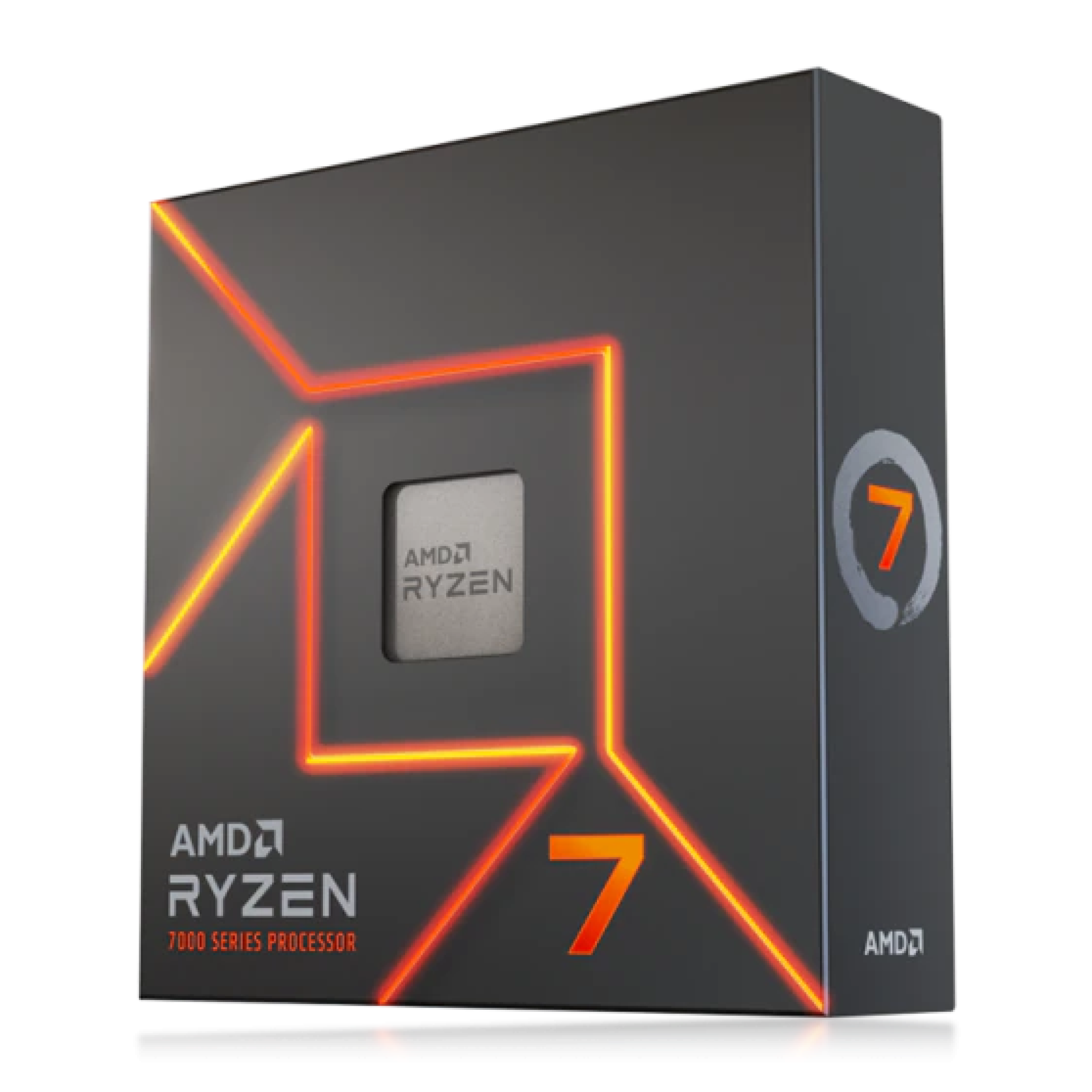
AMD Ryzen 7 9800X3D
The Ryzen 7 9800X3D is part of AMD’s Zen 5 chip lineup and is the first 8-core Zen 5 CPU to sport a 3D V-Cache. This technology allows the chip to store data directly without relying on RAM, making the 9800X3D a top choice for PC gaming builds. Its Zen 5 architecture is also quite efficient, although less so than the 9700X.
Pros- Excellent gaming performance
- Energy-efficient architecture
- Good price-to-performance ratio
Cons- Not the best choice for non-gaming rigs
-
Great for productivity
AMD Ryzen 7 9700X
$320 $359 Save $39
The Ryzen 7 9700X isn’t quite as impressive as the 9800X3D, as its comparable lack of 3D V-Cache technology makes it less ideal for gaming. Still, it’s a solid performer in its own right. If you’d rather save some cash to put towards a better GPU, the Ryzen 7 9700X is an excellent mid-range Zen 5 chip and a solid value.
Pros- Incredibly efficient
- Good single- and multi-core performance
- Great value
Cons- Outpaced by similar Intel chip

AMD’s new Zen 5 CPU family has impressed us so far, with two stand-out processors being the Ryzen 7 9800X3D and the Ryzen 7 9700X. These Zen 5 chips both sport a similar architecture with eight cores and 16 threads, but there are some notable differences that set them apart. If you’re set on an AMD CPU for your PC build, either processor is a great choice, but one is definitely a better option depending on how you plan to use it. Let’s break it down and see which Zen 5 CPU is the best fit for your battle station.
Price, specs, and availability
The Ryzen 7 9800X3D and the Ryzen 7 9700X are part of AMD’s 2024 processor lineup. The Ryzen 7 9700X hit the market in June, followed by the 9800X3D in late October. Both are 8-core, 16-thread CPUs built on AMD’s Zen 5 platform, with the Ryzen 7 9800X3D positioned as a higher-end gaming processor and the 9700X aimed more at mid-range builds and general use. The 9800X3D retails for $479, and the 9700X for $359.
Given how similar these CPUs are, that’s not an inconsiderable difference, but the 9800X3D offers some advanced gaming technology that justifies the higher price tag. Both CPUs are available for purchase directly from AMD (when in stock) and from major third-party retailers such as Amazon, Newegg, and Best Buy.

Related
AMD Ryzen 7 9800X3D review: Why would you buy any other CPU for gaming?
Playing around with AMD’s first Zen 5 X3D gaming CPU.

Related
AMD Ryzen 5 9600X and Ryzen 7 9700X review: The newly crowned kings of efficiency
Your power supply will be twiddling its thumbs.
Architecture and design
The cream of the Zen 5 crop

As part of AMD’s Zen 5 lineup, the Ryzen 7 9800X3D and 9700X share several similarities. Both are AM5 socket CPUs built on an energy-efficient 4nm process. They’re widely compatible with modern motherboards and other components. If you’re assembling a PC, you shouldn’t have to worry too much about either CPU slotting neatly into your build.
Both CPUs also support PCIe 5.0 and DDR5 memory, although the Ryzen 7 9700X supports up to DDR5-6000 RAM, while the 9800X3D only supports up to DDR5-5600 RAM. That’s a little surprising given that the 9800X3D is a higher-end CPU, but it still works fine with DDR5-6000 kits if that’s what you’ve got (we only ran into stability problems trying to push past 6,400MT/s). Given the chip’s overall superior performance, it’s not likely to matter.
Winner: Tie
Performance
It’s close, but one edges ahead

Regardless of your needs, performance is what counts with any CPU. This is where the Ryzen 7 9800X3D and 9700X differ the most. The 9800X3D has a base clock speed of 4.7 GHz with a boost clock speed of 5.2 GHz. In contrast, the 9700X clocks at 3.8 GHz out of the box but offers more overhead for overclocking with a boost clock speed of 5.5 GHz.
These are two of the best CPUs, without a doubt, and both performed admirably in our benchmark tests. The Ryzen 7 9800X3D outpaced the 9700X in all multi-core tests, although the latter did eke out the same or slightly better scores in a few single-core runs. Arguably, the most important difference between them is the Ryzen 7 9800X3D’s 3D V-Cache technology.

Related
What is Ryzen 3D V-Cache, and why is it good for gaming?
Cache isn’t anything new, but AMD’s 3D V-Cache is a new spin on it that might become an industry standard one day.
The Ryzen 7 9800X3D is the first 8-core Zen 5 chip to sport AMD’s 3D V-Cache. In a nutshell, 3D V-Cache allows the CPU to store data on the chip rather than relying on RAM, which is slower. AMD also calls this the second generation of its 3D V-Cache, moving the 105MB cache below the Zen cores instead of at the top. The result is better thermal performance, a major bottleneck for earlier chips featuring this cache technology.
The result is that the Ryzen 7 9800X3D is a seriously good CPU for gaming rigs and is a great choice for 1440p or 4K gaming, provided you pair it with the proper GPU. That said, the Ryzen 7 9700X performs on par with the 9800X3D for productivity tasks, and it’s more power-efficient (more on that next). If you’re not building a gaming PC, the 9800X3D might be overkill. Nonetheless, chances are good that you plan to do some gaming on your new PC, in which case the 9800X3D is the Zen 5 CPU to buy.
Winner: Ryzen 7 9800X3D
Energy efficiency
The 9700X sets the standard for efficiency

The second-most notable difference between the Ryzen 7 9700X and 9800X3D is thermal efficiency. This is apparent as soon as you look at their specs. The Ryzen 7 9700X features a thermal design power rating of 65W or a little more than half of the 120W TDP rating of the 9800X3D. That’s a big gap in the power draw. Our stress tests saw the 9700X pulling around 88 watts from the AM5 socket, while the 9800X3D capped at 150 watts.
Although the refreshed 3D V-Cache technology delivers more stable thermals than the previous generation, the Ryzen 7 9800X3D can still get toasty under load. It may even require an all-in-one liquid cooler for the best performance. That’s to be expected with any muscular hardware built for gaming, and it’s a trade-off that PC builders have been balancing for a long time. Still, it’s another feather in the cap of the Ryzen 7 9700X, highlighting that the cheaper Zen 5 CPU might be the better choice for non-gaming purposes.
Winner: Ryzen 7 9700X
Which CPU is right for your build?
Stacking up the Ryzen 7 9800X3D against the Ryzen 7 9700X isn’t an apples-to-apples comparison. Although these are both 8-core Ryzen 7 CPUs released in 2024, they’re built for different audiences. The Ryzen 7 9800X3D is tailor-made for 1440p and 4K gaming builds, whereas the Ryzen 7 9700X is positioned more as a mid-range “jack of all trades” option that does a lot for an attractive price. Overall, however, the Ryzen 7 9800X3D is clearly the superior processor.

Editor’s choice
AMD Ryzen 7 9800X3D
The AMD Ryzen 7 9800X3D is the first 9000 series CPU from AMD with its 3D V-Cache technology, offering plenty of cache for storing data on the chip rather than slower RAM. It’s an ideal pick for a high-end gaming PC with the latest and greatest from AMD, Intel, and Nvidia.
Nonetheless, the performance gap isn’t massive, and the Ryzen 7 9700X is still a very respectable CPU for the price. It’s a great alternative for builders who don’t need to squeeze every drop of juice out of their hardware to run the latest AAA games— getting a good GPU is more important for that purpose, anyway. Its lower price also makes the Ryzen 7 9700X a very attractive value, and since it’s more energy-efficient, it’s perhaps the better option for a productivity-focused PC setup.

Better for productivity
AMD Ryzen 7 9700X
$320 $359 Save $39
AMD’s all-new Ryzen 7 9700X not only undercuts its predecessor, but it’s more powerful and sips less electricity. 8 cores and 16 threads will ensure all your favorite games run as intended by the developers, and a 5.5 GHz boost speed will make easy work of heavier loads.
#Ryzen #9800X3D #Ryzen #9700X #Zen #CPU
source: https://www.xda-developers.com/ryzen-7-9800x3d-vs-ryzen-7-9700x/


